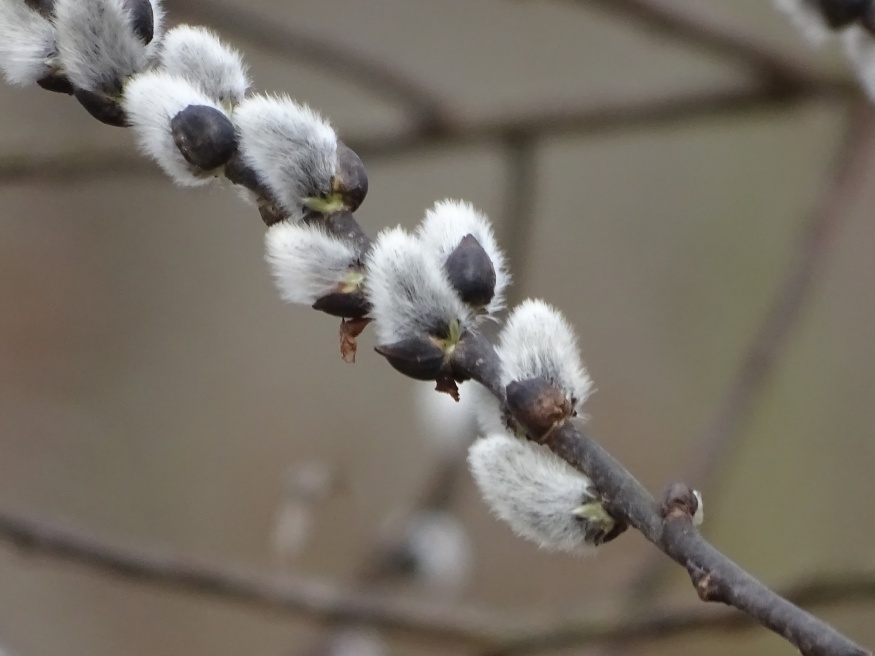
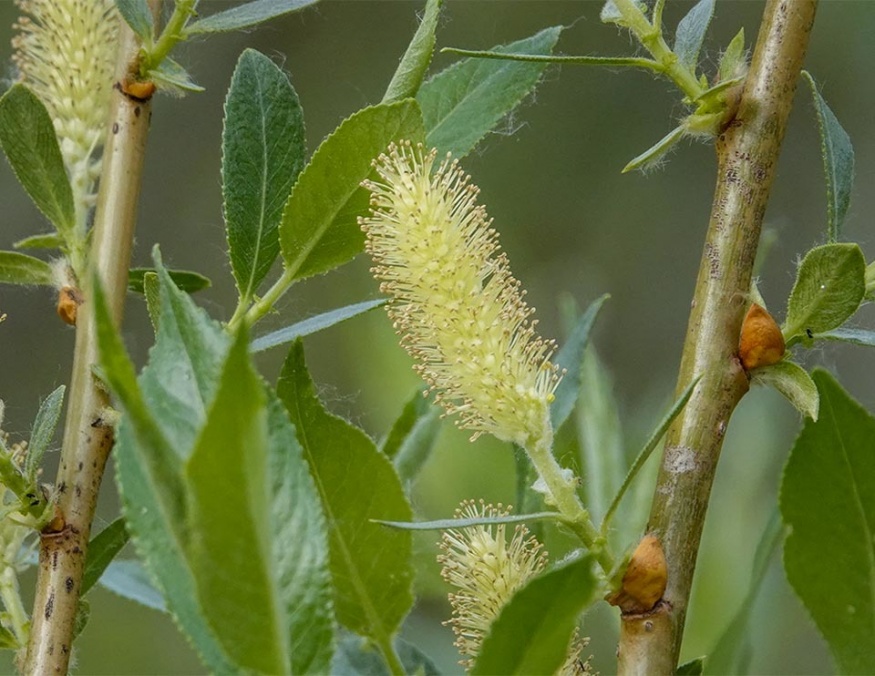
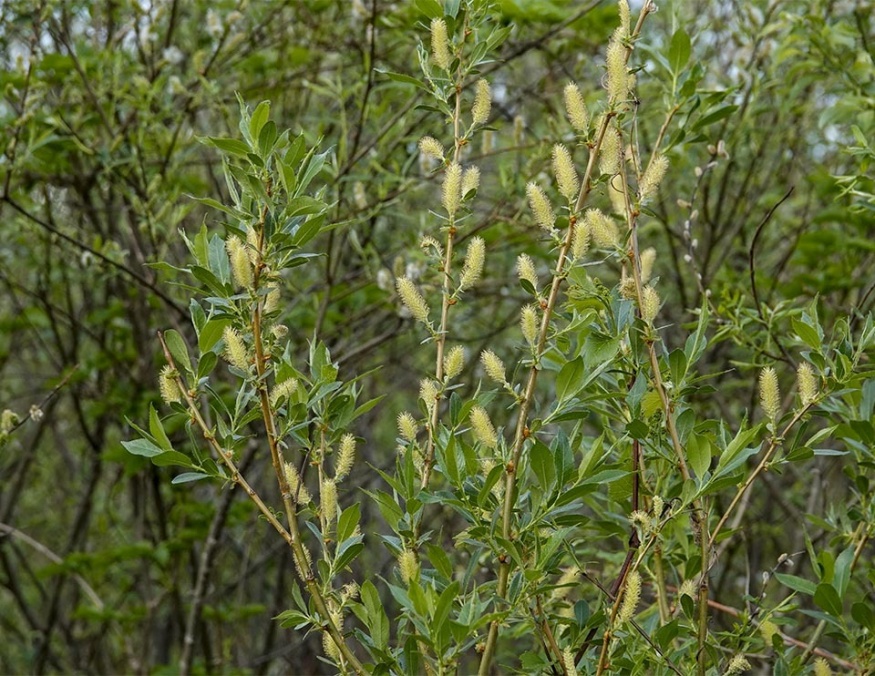
Willow (Salix spp.) includes a large group of deciduous trees and shrubs commonly found along rivers, lakes, and wetlands throughout the temperate regions of the Northern Hemisphere. Hardy to zone 2, willows grow rapidly and are well adapted to moist soils and flood-prone landscapes. Many species develop slender, flexible branches and narrow leaves that move easily in the wind, giving the trees a graceful, flowing appearance. Mature trees can range from medium-sized shrubs to tall spreading trees depending on the species. In early spring, willows produce soft catkins that provide one of the first important food sources for bees and other pollinators. Their extensive root systems help stabilize riverbanks and prevent erosion. Medicinally, the inner bark of several species has been used for centuries as a natural pain reliever and fever remedy due to its salicin content. Because of this property, willow is often considered one of the historical plant sources that inspired the development of modern aspirin.
Willow bark has been used for centuries in many parts of the world as a natural remedy for pain, fever, and inflammation. Indigenous peoples of North America and early European herbalists commonly prepared decoctions of the inner bark to treat headaches, joint pain, fevers, and rheumatic conditions. The bark contains salicin, a compound related to aspirin, which contributes to its analgesic and anti-inflammatory effects. Willow bark teas and tinctures were traditionally used for toothaches, menstrual cramps, and muscle soreness. Externally, willow preparations have been applied as washes or compresses for wounds, skin inflammation, and minor infections. Because of its ability to relieve pain and reduce inflammation, willow has long been considered one of the most important herbal remedies for musculoskeletal discomfort and feverish illnesses.
Willow is not a classical herb in traditional Chinese medicine, but its medicinal qualities align well with TCM principles. Willow bark is considered cooling and bitter, helping to clear heat and relieve pain associated with inflammation and stagnation. Its actions are often interpreted as moving blood and relieving obstruction in the channels, which can ease joint stiffness, muscle soreness, and headaches. Because of its cooling and detoxifying nature, willow preparations may also be used for mild fevers or inflammatory skin conditions. When applied externally, willow washes and compresses help reduce swelling and soothe irritated tissues. In energetic terms, willow helps disperse heat and stagnation while calming inflamed tissues and supporting the body's natural healing processes.
Willow bark contains salicin, flavonoids, tannins, and phenolic glycosides. Salicin is converted in the body into salicylic acid, contributing to the plant's pain-relieving and anti-inflammatory properties.
Willow branches are flexible and resilient, bending without breaking in strong winds. This quality has been associated with the plant's traditional role in relieving stiffness and restoring flexibility to painful joints and muscles.
Willow is often combined with meadowsweet, turmeric, ginger, devil's claw, and black cohosh in herbal preparations for joint pain and inflammation.
Avoid use in individuals allergic to aspirin or salicylates. Do not use in children with viral illnesses due to the risk of Reye's syndrome. Use cautiously during pregnancy and with anticoagulant medications.
| Tastes | bitter, astringent |
|---|---|
| Organ Systems | circulatory, nervous, muscular |
| Thermal Nature | cool |
| Moisture | drying |
| Parts Used | inner bark, leaves, branches |
| Preparations | decoction, tea/infusion, tincture, wash, compress |
| Organs and Tissue | muscle & connective tissue, blood |
Willows grow quickly in moist soils and are most commonly found along rivers, wetlands, and lowland areas. They thrive in full sun but tolerate partial shade. The trees prefer moist, fertile soil and can tolerate flooding or waterlogged conditions. Willow is extremely easy to propagate from hardwood cuttings taken during dormancy in late winter or early spring. Cut branches 8–12 inches long and place them directly into moist soil where they will readily root. Seeds are viable only for a short time and must be sown immediately after ripening. Due to their aggressive roots and rapid growth, willows should be planted well away from foundations, septic systems, and underground pipes.