About This Plant

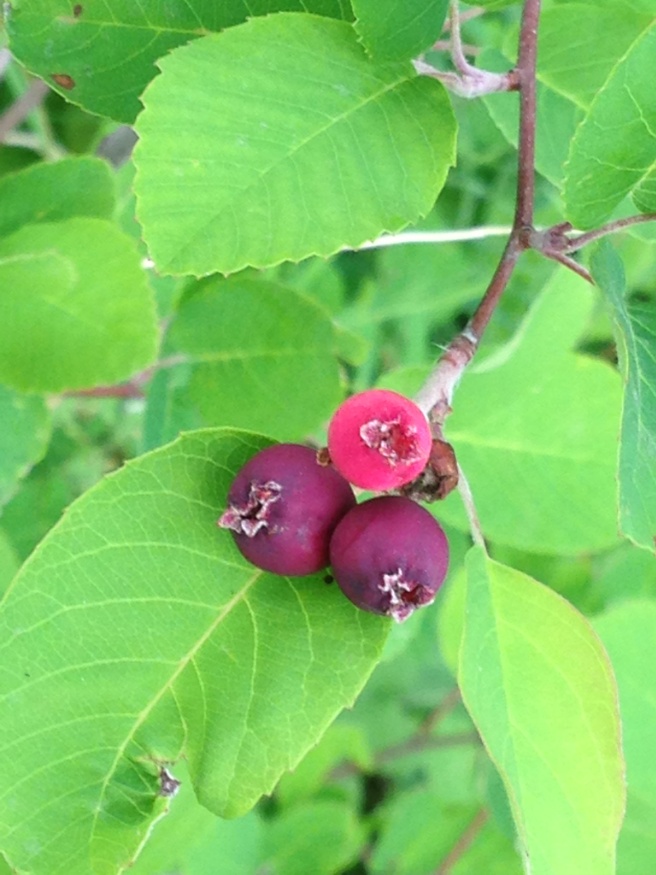
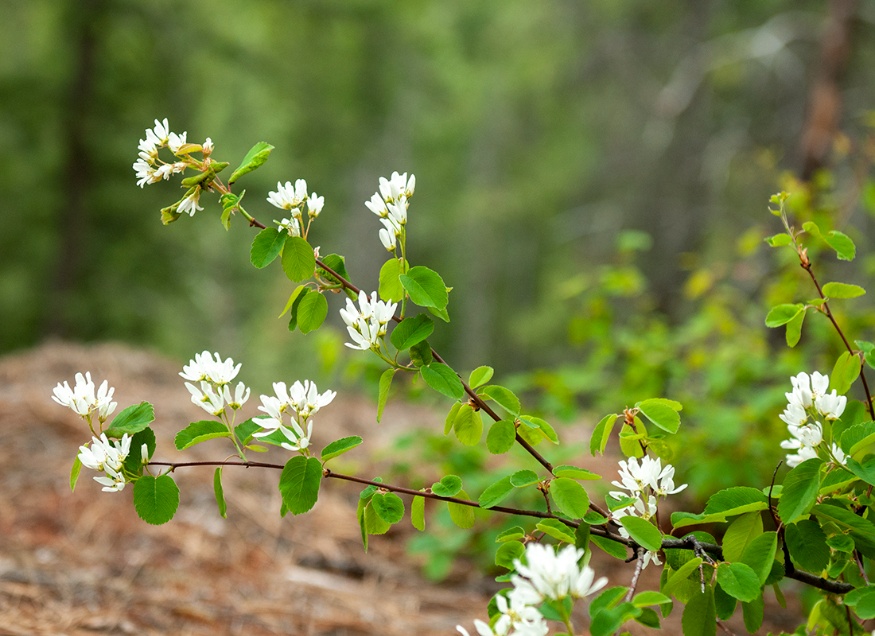
Saskatoon berries (Amelanchier spp.) are deciduous shrubs or small trees native to North America, with notable species including serviceberry (Amelanchier arborea) and Saskatoon berry (Amelanchier alnifolia). These plants produce clusters of small white flowers in early spring, followed by round, dark purple berries in summer. The berries are sweet, nutrient-dense, and highly attractive to birds and other wildlife.

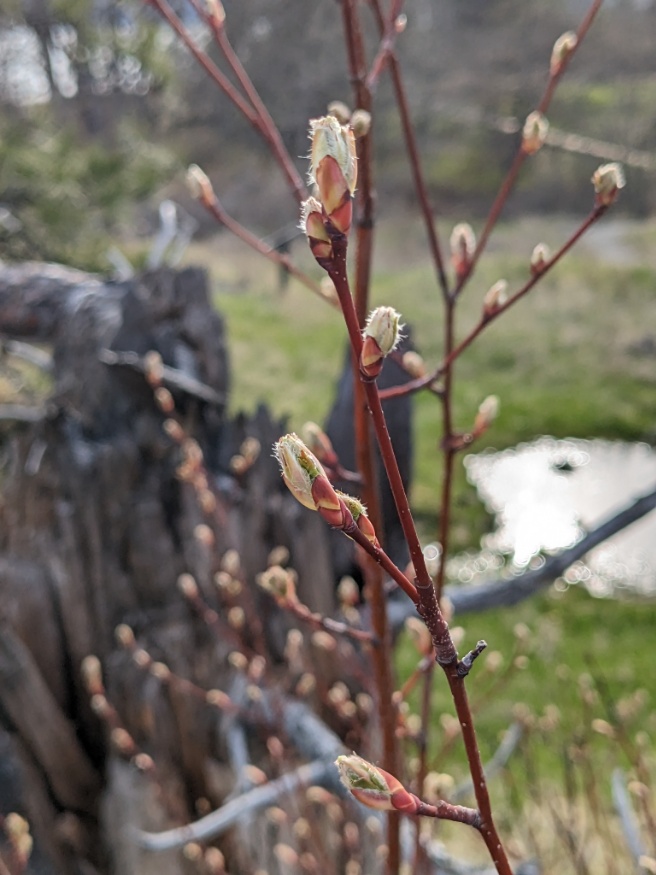
Saskatoon berry shrubs grow in a variety of habitats, from forest edges and prairies to rocky slopes and upland hillsides. Plants may reach 25 feet in height with a rounded or multi-stemmed form, and their bark ranges from smooth and gray when young to furrowed and dark with age. The shrubs are hardy, drought-tolerant once established, and improve soil fertility in disturbed sites.

Traditionally, the berries were an important food source and were used medicinally for digestive and urinary support. Their combination of ecological, culinary, and medicinal value makes saskatoon berry a versatile and valuable plant for northern gardens, naturalized landscapes, and restoration projects.

Traditional Use

Folk Use

Saskatoon berries have long been valued by Indigenous peoples of North America for both food and medicine. The sweet, dark purple berries of species such as Amelanchier alnifolia and Amelanchier arborea were eaten fresh, dried, or cooked into jams, syrups, and pemmican. Beyond their nutritional value, berries were used as a mild astringent to support digestive health and treat diarrhea. Leaves and bark were sometimes used in teas for colds, sore throats, and general tonics. The wood, though hard, occasionally served for small tools and utensils, while berry juice was applied topically as a mild antiseptic or dye. This combination of edible and medicinal uses made saskatoon an important multipurpose plant for food security and health.

Chinese Medicine

Though not a major herb in classical Chinese medicine, Amelanchier spp. share characteristics with other fruit-bearing astringent herbs. The berries are considered neutral in thermal nature and mildly astringent, supporting digestive and urinary health. In folk practices, berry decoctions or syrups were used to strengthen the stomach, calm mild diarrhea, and nourish the blood. The berries' antioxidant-rich profile aligns with the traditional aim of preserving vitality and protecting tissues. Leaf infusions or mild decoctions were applied externally for minor skin irritations or to soothe mucous membranes. Overall, saskatoon berries provide gentle support to digestion, circulation, and skin integrity, reflecting their role as both food and tonic.

Special Chemistry

Saskatoon berries contain anthocyanins, flavonoids, and polyphenolic compounds, giving them antioxidant and anti-inflammatory properties. They are rich in vitamin C, dietary fiber, and minerals such as manganese and magnesium. These compounds support their traditional use for digestive, circulatory, and skin health.

Signature

The dark purple berries and early spring flowers symbolize nourishment and resilience, offering both sustenance and medicinal support. Their multi-stemmed, hardy growth mirrors the plant's adaptability and ability to thrive in northern climates, reflecting a role as a stabilizing, health-promoting food source.

Combinations

Saskatoon berries can be combined with other antioxidant-rich berries such as blueberry, chokeberry, or elderberry for syrups, teas, and jams. Leaf teas may be blended with raspberry leaf or blackberry leaf to enhance astringent and digestive effects. For topical applications, berry extracts can be paired with calendula or comfrey.

Precautions

Berries are generally safe for consumption. Excessive intake of leaf or bark preparations may cause mild digestive upset due to astringency. Avoid consuming large amounts of unripe berries, which may be mildly laxative.

Medicinal SpeciesAmelanchier arborea, Amelanchier alnifolia, Amelanchier canadensis
Tastessweet, astringent
Organ Systemscirculatory, digestive, urinary, immune/lymphatic, integumentary (skin, hair, nails)
Thermal Natureneutral
Moistureneutral
Parts Usedearly shoots, leaves, branches, berries
Preparationsdecoction, extract, salve, tea/infusion, powder, syrup
Organs and Tissuestomach, small intestine, kidneys, mucosa, blood

Growing Guide

Saskatoon berries thrive in full sun but tolerate partial shade, growing best in moist, fertile, and well-drained soils. They are adaptable to a range of soil types, including heavy clay, and are moderately drought tolerant once established. Seeds benefit from cold moist stratification for several weeks prior to spring sowing. Young plants establish quickly and can be pruned to encourage a multi-stemmed form or trained as a small tree. Regular watering in the first few years promotes strong root development. They are hardy to zone 2, making them suitable for northern climates, and require minimal maintenance once established.