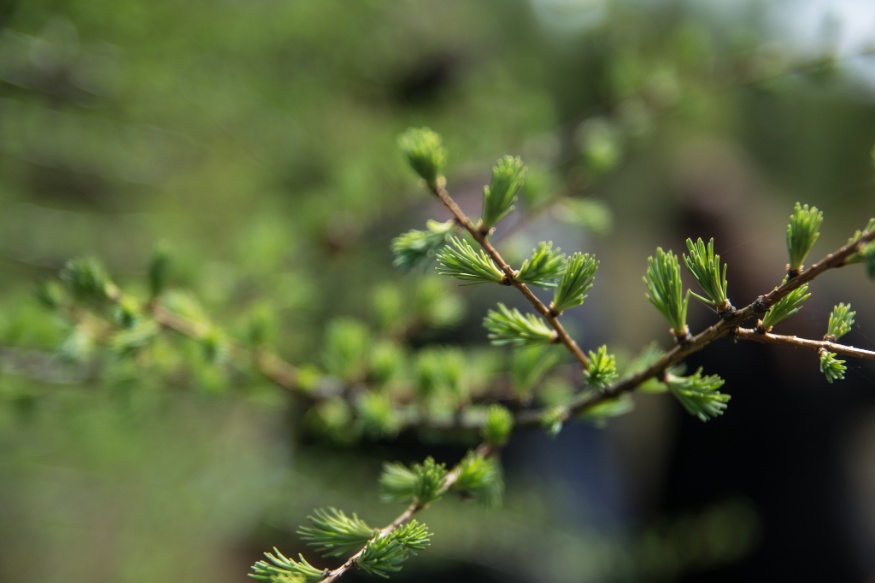
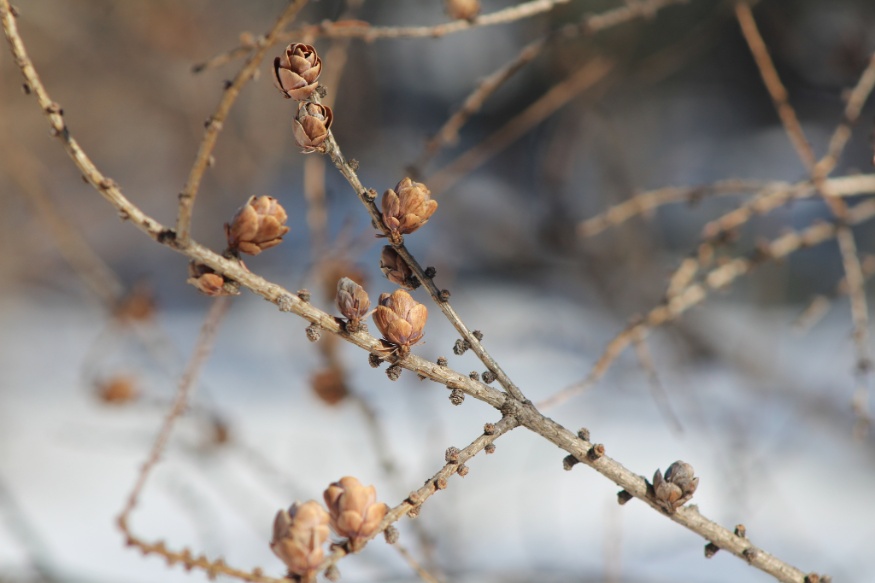
tamarack buds
© Brad Winckelmann, some rights reserved (CC-BY-NC)
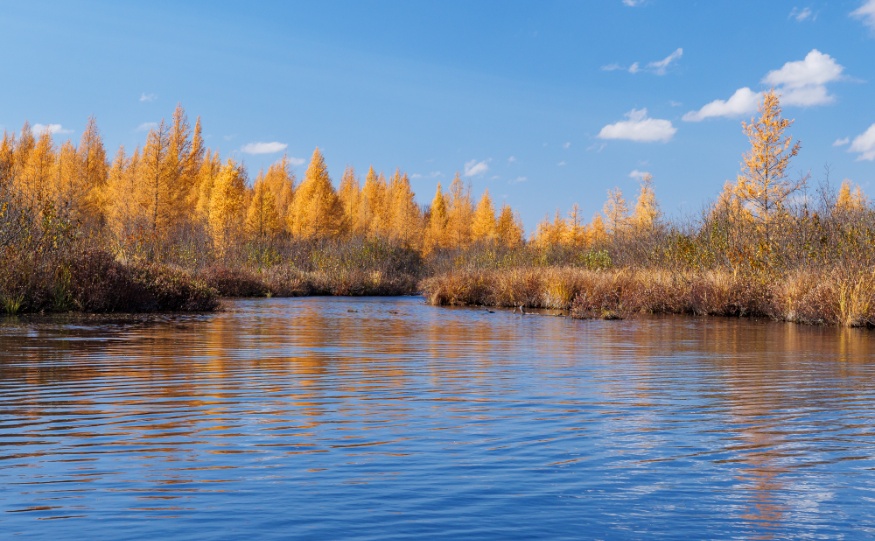
tamarack in fall
© Kristen Smith, all rights reserved
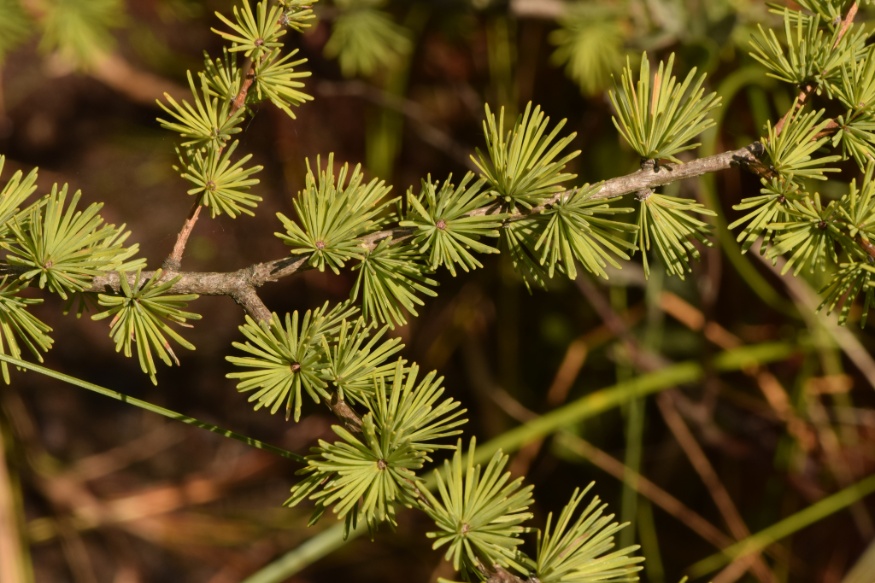
tamarack needles
© Pauline Catling, all rights reserved
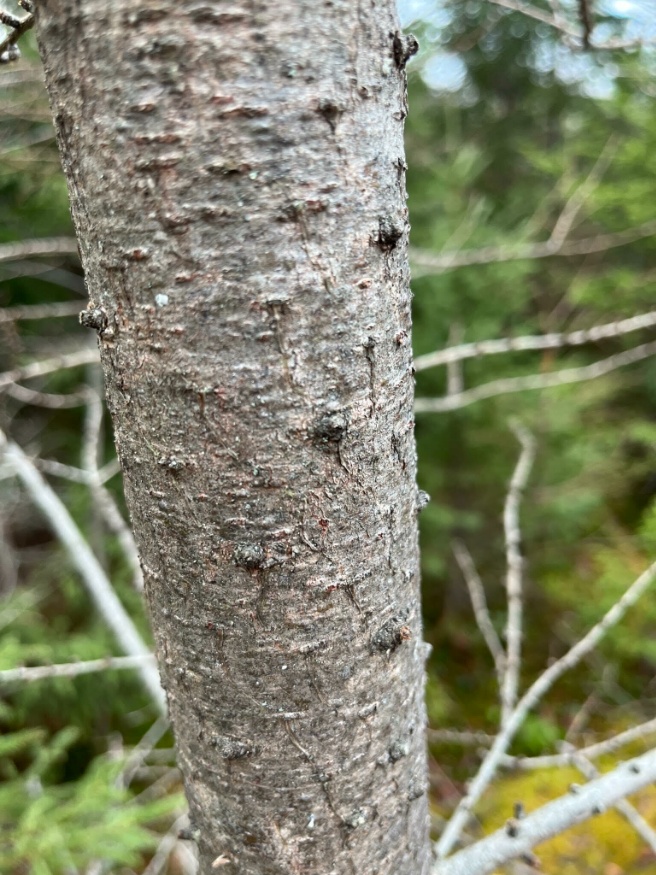
tamarack bark
© avery-parsons, some rights reserved (CC-BY-NC)
tamarack cones
© Sophia Sperduto, some rights reserved (CC-BY-NC)

About This Plant

Tamarack is a small to medium sized deciduous conifer. It grows across Canada from the far east to north east BC, with an isolated population in Alaska and a small population around Prince George, BC.

Blue-green needle-like leaves turn vibrant yellow in the fall before dropping, exposing bare twigs in the winter. The bark is gray and flaky, reddish underneath.

Commonly found in swamps, bogs, low wetlands, it is one of the first to grow as a pioneer species in a wet clearing, or after a fire. Tamarack is very cold tolerant and capable of adapting to diverse soil conditions.

The inner bark, needles, resin, and branches are prepared as teas, decoctions, tinctures, salves, compresses, baths, and extracts for respiratory support, digestive health, and skin care.

Traditional Use

Folk Use

Tamarack has been used in North American folk medicine for its astringent, warming, and antiseptic properties. Indigenous communities utilized the inner bark as a survival food and mild astringent tea to support digestive health. Resin and needles were boiled into decoctions for colds, sore throats, and coughs, helping to loosen mucus and soothe irritated lungs. Externally, resin and needle poultices were applied to wounds, ulcers, and skin irritations due to their antiseptic properties. Tamarack bark tea was sometimes used for mild urinary complaints and to tone the kidneys. The wood, bark, and resin were also valued for practical purposes, including tanning, dye, and as waterproofing agents. These traditional uses highlight the tamarack's role as both a medicinal and utilitarian species in northern ecosystems.

Chinese Medicine

In folk and regional Chinese herbal practices, Larix laricina shares properties with other larch species used for respiratory and circulatory support. The inner bark and needles are considered neutral in thermal nature and drying, used to strengthen the lungs, relieve cough, and support immune function. Resin or needle decoctions are applied externally to reduce swelling and inflammation of skin lesions. Larch tea supports kidney and bladder function and is sometimes used to stimulate circulation. Overall, tamarack's medicinal use aligns with clearing dampness, promoting lung health, and aiding tissue healing.

Special Chemistry

Tamarack contains resin acids, tannins, flavonoids, and essential oils, particularly alpha-pinene and limonene, which provide antiseptic, expectorant, and anti-inflammatory properties. The inner bark contains mucilaginous compounds that support soothing teas for digestive and respiratory uses. The wood and bark also contain tannins used for astringent and tanning applications.

Signature

The deciduous conifer's bright golden needles in autumn symbolize transformation and renewal. Its ability to thrive in wetlands and harsh northern climates mirrors its use for strengthening the lungs, purifying tissues, and supporting resilience in traditional medicine.

Combinations

Tamarack decoctions combine well with spruce or pine needles for respiratory teas. Resin salves may be blended with plantain, calendula, or comfrey for wound care. For digestive tonics, inner bark can be combined with blackberry root or oak bark.

Precautions

External use of resin should be diluted to avoid skin irritation. Large internal doses of bark preparations may cause mild digestive upset. Pregnant or nursing individuals should use caution with concentrated remedies. Generally safe in moderate traditional use.

Medicinal SpeciesLarix laricina
Tastesbitter, acrid/pungent, astringent
Organ Systemscirculatory, respiratory, urinary, immune/lymphatic, integumentary (skin, hair, nails)
Thermal Natureneutral
Moisturedrying
Parts Usedinner bark, leaves, branches
Preparationsdecoction, extract, salve, tea/infusion, tincture, bath, compress
Organs and Tissuelungs, kidneys, bronchioles, mucosa, blood

Growing Guide

Tamarack is a hardy deciduous conifer that thrives in wet soils, including bogs, swamps, and floodplains, but tolerates moderately upland sites. It grows best in full sun and acidic, moist soils, and benefits from well-drained conditions despite its tolerance for wet feet. Seeds require cold moist stratification for 4–8 weeks before sowing in spring. Tamarack establishes slowly at first but develops a deep taproot, making older trees difficult to transplant. Pruning can shape young trees, but mature tamaracks maintain a naturally conical crown. Hardy to zone 0, they are suited for northern climates and wetland restoration.