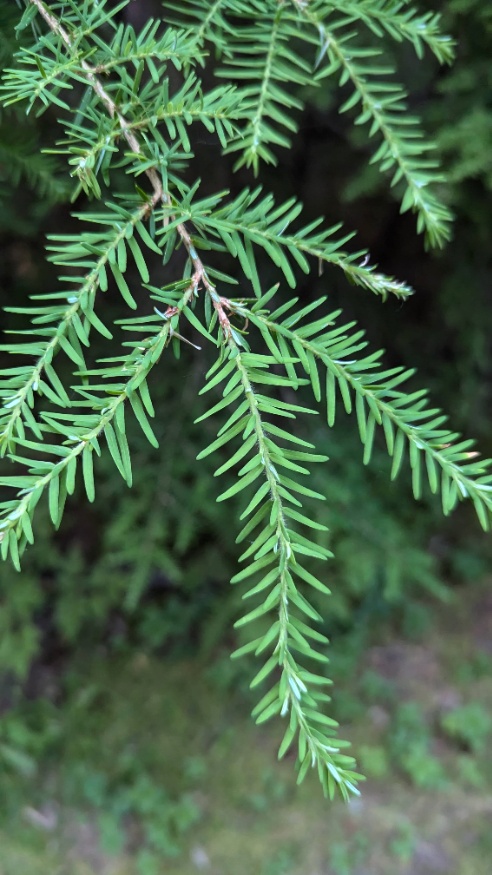
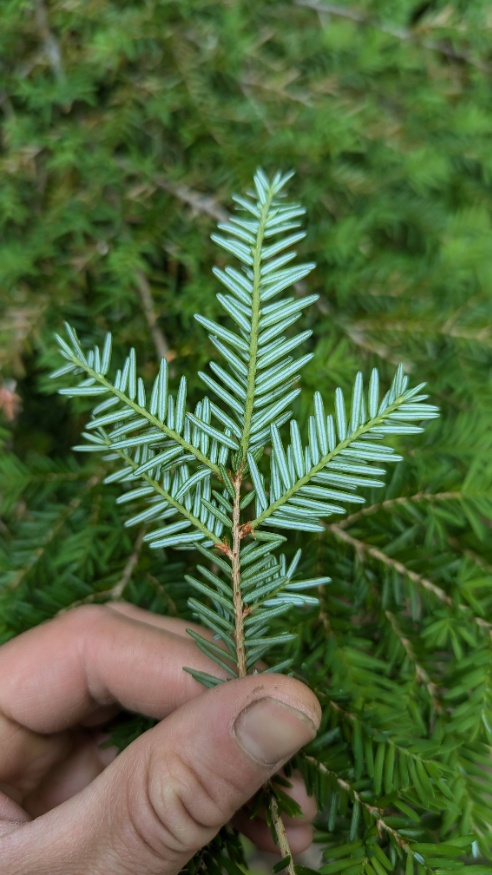
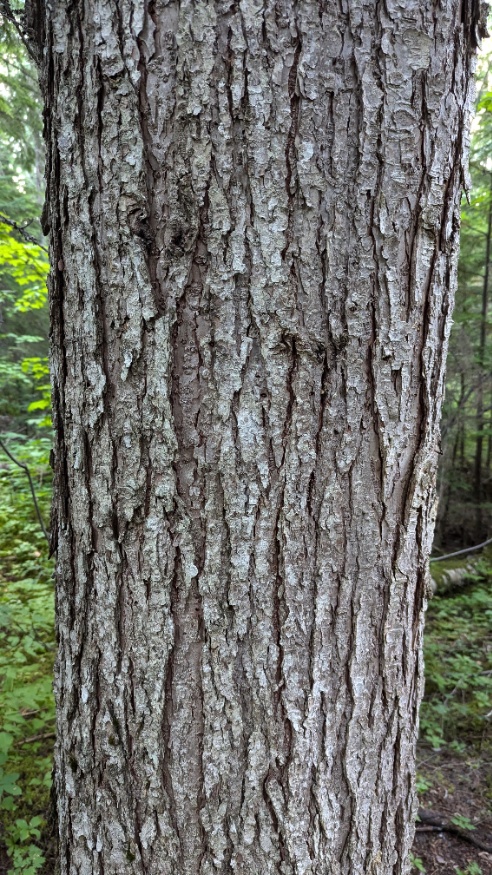
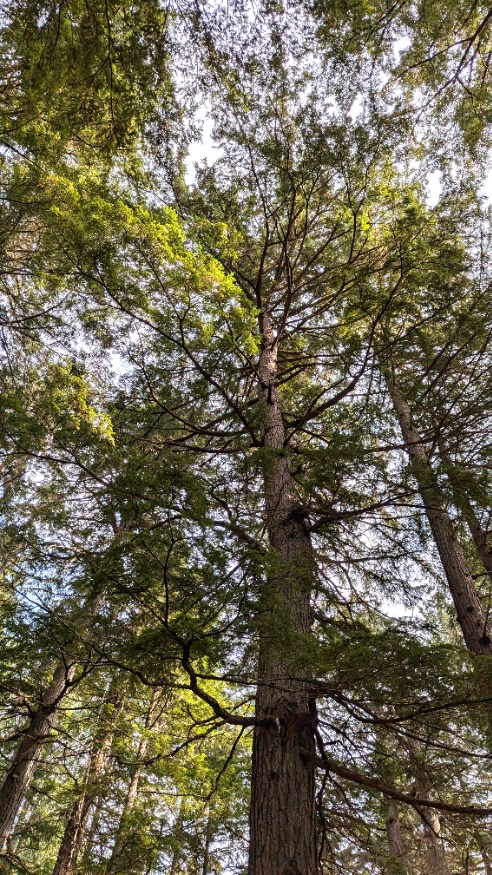
Hemlocks (Tsuga spp.) are slow-growing, long-lived coniferous trees or shrubs native to North America and Asia. Eastern hemlock (Tsuga canadensis) and western hemlock (Tsuga heterophylla) are notable species valued for their dense, conical crowns and soft, dark green needles. Hemlocks thrive in shaded, cool forests, often forming understory layers beneath taller canopy trees.
The trees produce small, pendulous cones that feed birds and small mammals. Their straight, durable wood has historically been used for construction and furniture, while the aromatic needles and bark have long served in medicinal teas and topical preparations. Hemlocks are hardy to zone 3, tolerate wet soils, and play important ecological roles in stabilizing soil, moderating water flow, and supporting wildlife. With their evergreen beauty and ecological significance, hemlocks remain essential components of northern forest ecosystems and shaded landscapes.
Hemlocks have been traditionally used by Indigenous peoples in North America and European settlers for their medicinal and practical properties. Needle and branch decoctions were employed to treat coughs, colds, and respiratory congestion, providing warming and expectorant effects. The inner bark was sometimes prepared as a tea to relieve digestive issues or as a mild tonic. Externally, poultices or compresses made from leaves and bark were applied to wounds, bruises, or inflamed skin due to their antiseptic and astringent properties. Hemlock wood was also valued for building, carving, and making tools. Though not consumed as a staple food, the plant's aromatic components made it a useful addition to medicinal and survival practices.
While Tsuga species are not classical Chinese herbs, their properties are recognized in regional East Asian herbal practices. The leaves and inner bark are considered cooling and drying, supporting respiratory health and helping reduce phlegm. Decoctions of needles or branches are used externally for minor skin irritations and wounds, while internal teas support lung function, strengthen the immune system, and promote circulation. Hemlock's astringent qualities help stabilize tissues and reduce inflammation, aligning with its traditional uses in folk medicine for respiratory and skin conditions.
Hemlock needles and bark contain flavonoids, tannins, and volatile oils including alpha- and beta-pinene, which provide antimicrobial, astringent, and expectorant properties. These compounds support traditional uses for respiratory relief, wound care, and mild circulatory tonics.
Hemlocks' tall, dark evergreen crowns and shade-tolerant growth symbolize protection, endurance, and resilience. Their astringent inner bark and aromatic needles mirror the plant's role in supporting respiratory and tissue health.
Hemlock needles blend well with pine or spruce for respiratory teas. For topical poultices or salves, combine with plantain, calendula, or yarrow. Decoctions may be paired with blackberry leaf or raspberry leaf for digestive support.
Internal use should be moderate due to high tannin content, which may irritate the stomach. Avoid using concentrated needle or bark preparations for extended periods. Pregnant or nursing individuals should consult a practitioner before use. External applications should be patch-tested to prevent skin irritation.
| Medicinal Species | Tsuga canadensis, Tsuga heterophylla, Tsuga caroliniana |
|---|---|
| Tastes | bitter, acrid/pungent, astringent |
| Organ Systems | circulatory, respiratory, urinary, immune/lymphatic, integumentary (skin, hair, nails) |
| Thermal Nature | cool |
| Moisture | drying |
| Parts Used | inner bark, leaves, branches |
| Preparations | decoction, extract, salve, tea/infusion, tincture, bath, compress |
| Organs and Tissue | lungs, kidneys, bronchioles, mucosa, blood |
Hemlocks thrive in cool, moist forests with partial to full shade. They prefer well-drained, slightly acidic soils but tolerate a range of conditions, including wet feet in lowland areas. Seeds require cold moist stratification for 4–8 weeks before sowing in spring. Young seedlings establish slowly and need protection from wind and sun, but once established, hemlocks are long-lived and resilient. They can be pruned lightly to maintain form, and older trees develop deep, spreading root systems. Hemlocks are hardy to zone 3 and suitable for northern climates and shaded woodland gardens.