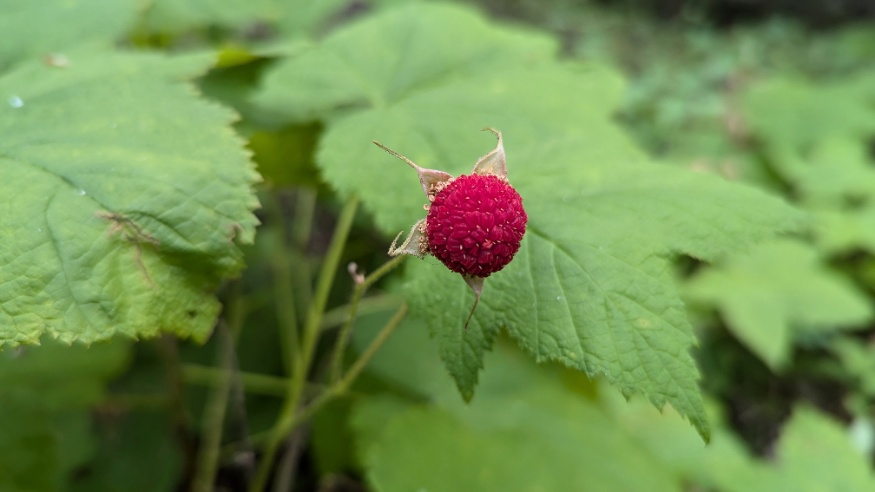
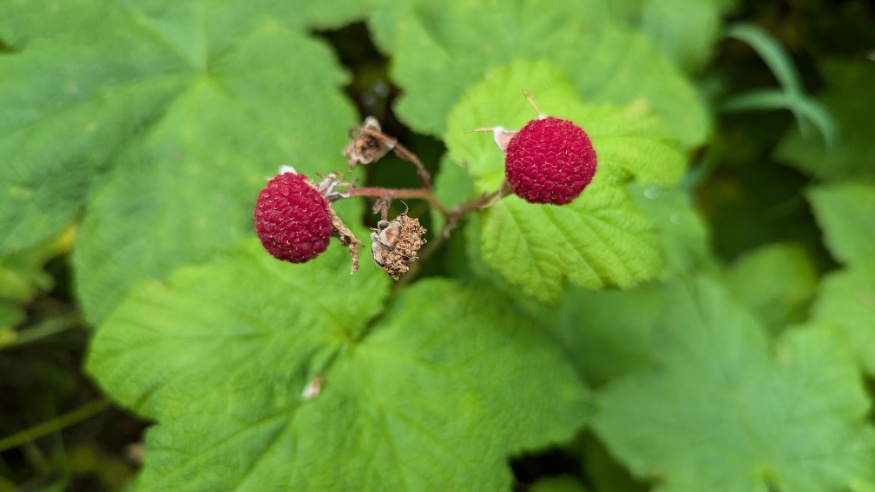
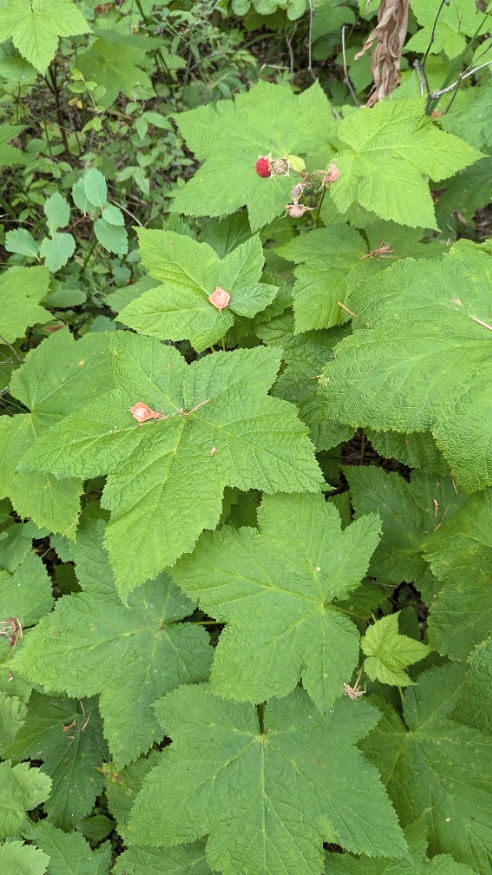
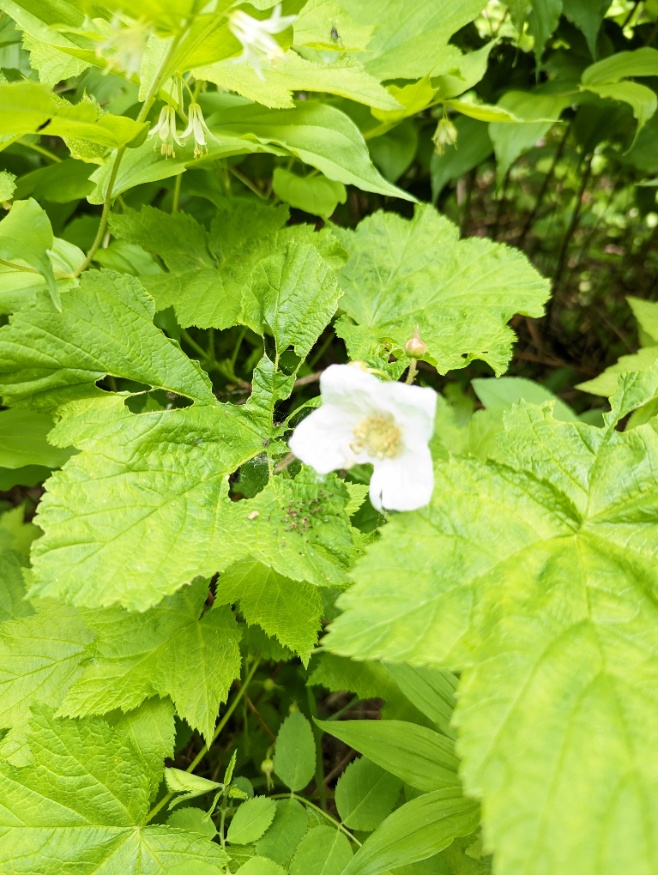
Thimbleberry Fruit
Thimbleberry Fruit
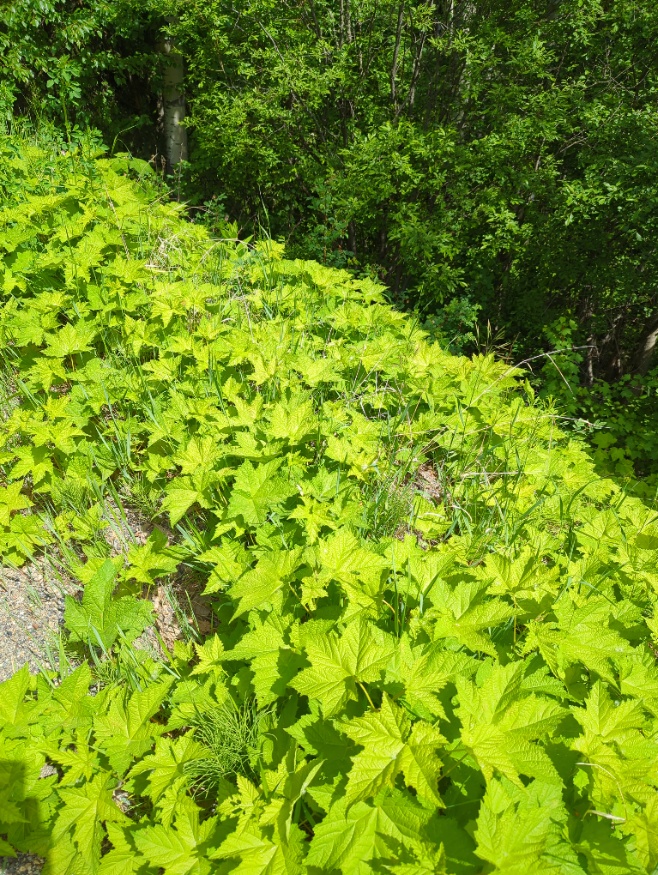
Thimbleberry Leaves
Thimbleberry Flowers
Thimbleberry
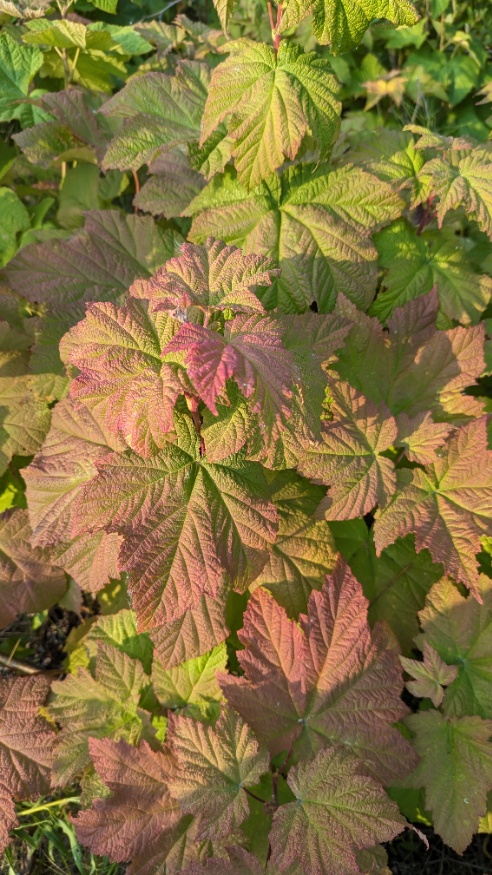
Thimbleberry Fall Colour

About This Plant

Thimbleberry is an attractive perennial shrub Native to North America (mainly in the west and north). It's Thicket forming vie underground rhizomes, preferring rich well drained slightly acidic soils. Its natural habitat includes riverbanks, forest edges, thickets, and disturbed areas. Large hairy leaves resemble that of maple in shape are of colourful interest in the fall. Large fragrant white flowers appear in late spring to mid summer followed by tasty edible spherical fruit similar to raspberry. These appear appear mid to late summer on smooth stems which lacks pricks (unlike it's close relatives).

The berries, leaves, and roots are prepared as teas/infusions, decoctions, tinctures, syrups, powders, and washes for digestive support, reproductive health, wound care, and immune support.

Traditional Use

Folk Use

Thimbleberry has long been used by Indigenous peoples throughout western North America as both a food and a gentle medicinal plant. The bright red berries were eaten fresh, dried, or mixed with other fruits to make cakes and preserves. Medicinally, the leaves and roots were valued for their astringent properties. Leaf infusions were commonly used for digestive upset, diarrhea, and mild stomach inflammation. Similar to other Rubus species, thimbleberry leaves were also used as a women's herb to tone the uterus and support pregnancy and childbirth. Poultices of the fresh leaves were applied to burns, cuts, and skin irritations to help reduce inflammation and promote healing. Root decoctions were sometimes used as a wash for wounds or as a gargle for sore throats. Because the plant grows abundantly in forest clearings and disturbed woodland edges, it became a readily available remedy for both everyday ailments and minor injuries.

Chinese Medicine

Thimbleberry is not a traditional herb in classical Chinese medicine, but its actions resemble several mild astringent and cooling herbs used to stabilize tissues and support digestion. Energetically, the leaves are considered slightly cooling and astringent, helping to tone and tighten tissues while reducing excess moisture or inflammation. In a functional sense it supports the Spleen and Stomach by improving digestive tone and reducing diarrhea or loose stools. The herb's mild astringency also suggests a role in supporting reproductive health by strengthening uterine tissue and reducing excessive discharge. Its cooling and soothing nature may help clear mild heat from inflamed tissues, especially in the digestive tract and skin. Modern herbalists sometimes view thimbleberry as similar in action to raspberry leaf, offering gentle nutritive and toning properties that support digestive balance and reproductive wellness without being strongly stimulating.

Special Chemistry

Thimbleberry leaves contain tannins responsible for their astringent action, along with flavonoids, phenolic compounds, and small amounts of vitamins and minerals. The berries provide vitamin C, antioxidants, and anthocyanins that contribute to their nutritive and anti-inflammatory effects.

Signature

The soft, broad, velvety leaves resemble protective cloth or bandage material, reflecting the plant's traditional use in soothing wounds and irritated skin. The hollow, thimble-shaped berries suggest nourishment and gentle support for bodily tissues.

Combinations

Thimbleberry leaf can be combined with raspberry leaf, nettle, and oatstraw in nutritive tonic blends for reproductive and digestive health. For digestive upset it pairs well with blackberry leaf, chamomile, or plantain.

Precautions

Generally considered very safe as a mild food and medicinal plant. High tannin content may cause mild constipation if used in large quantities. Individuals sensitive to astringent herbs should use moderate amounts.

Medicinal SpeciesRubus parviflorus, Rubus idaeus, Rubus occidentalis, Rubus strigosus, Rubus chamaemorus
Tastessweet, astringent
Organ Systemsdigestive, immune/lymphatic, reproductive, integumentary (skin, hair, nails)
Thermal Naturecool
Moisturedrying
Parts Usedroots, leaves, berries
Preparationsdecoction, tea/infusion, tincture, powder, wash, syrup
Organs and Tissuestomach, small intestine, mucosa, blood

Growing Guide

Cold moist stratify for 3 to 4 months. Shallowly plant seeds near the surface; keep in part shade and don't allow them to overheat or dry out. while in seedling stage.