
About This Plant
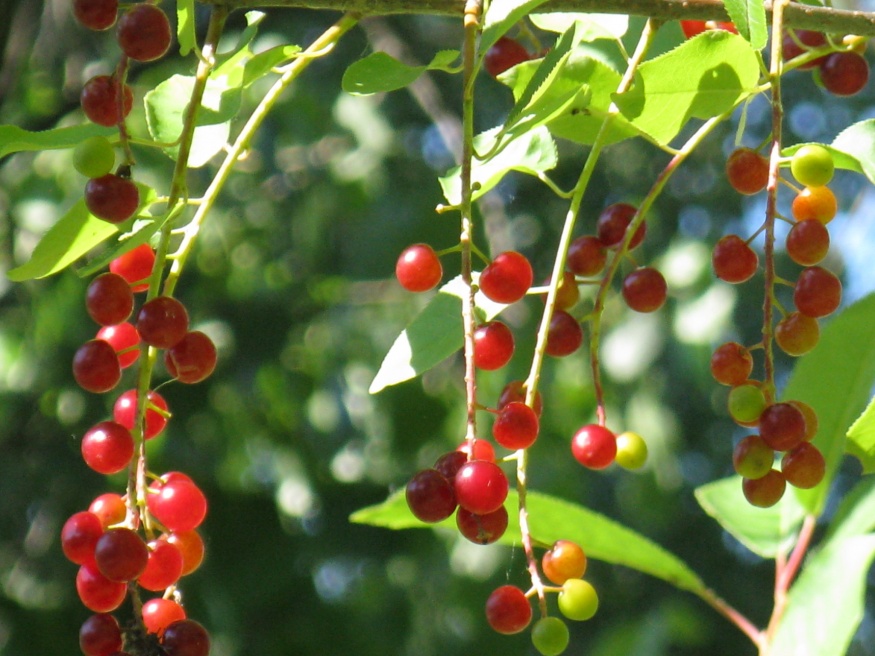
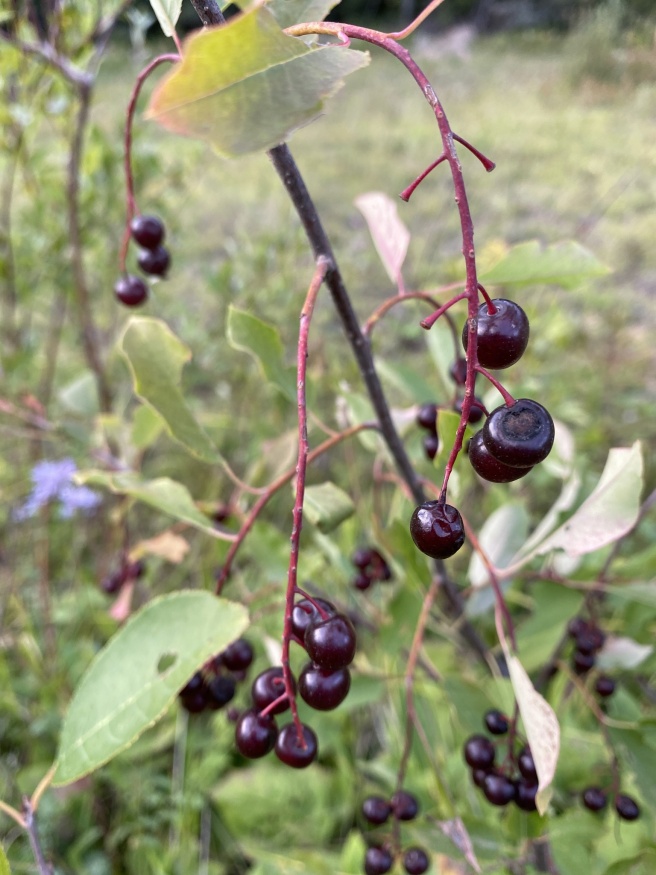
Choke cherry (Prunus virginiana) is a hardy shrub or small tree found across much of North America, thriving along riverbanks, forest edges, and open plains. In spring, clusters of fragrant white flowers appear along slender branches, drawing bees and other pollinators to the landscape. These blossoms give way to small round berries that ripen from red to deep purple or nearly black by late summer.
Although the fruit is quite astringent when eaten fresh, it becomes pleasantly tart and flavorful when cooked. For generations, people have used choke cherries to make syrups, jams, and traditional foods. Wildlife also rely heavily on the fruit, with birds and mammals eagerly feeding on the berries as they ripen.
The plant spreads readily through suckers, often forming dense thickets that provide shelter for birds and small animals. Its adaptability and resilience allow it to grow in a wide variety of climates and soils. With showy spring flowers, useful fruit, and ecological importance, choke cherry remains an enduring and valuable component of natural landscapes.
Traditional Use
Folk Use
Chinese Medicine
Combinations
Precautions
| Medicinal Species | Prunus virginiana |
|---|---|
| Tastes | bitter, astringent |
| Organ Systems | digestive, respiratory |
| Thermal Nature | cool |
| Moisture | drying |
| Parts Used | inner bark |
| Preparations | decoction, tea/infusion, syrup |
| Organs and Tissue | lungs, stomach |