Alderleaf Buckthorn
Other Names: alder buckthorn, alder-leaved coffeeberry, alderleaf coffeeberry
Family: Rhamnaceae Native to: Eastern North America, Interior North America, Western North America
Eco benefits: attracts pollinators, erosion control, attracts birds
Natural habitat: waters edge, floodplains
Shapes: round, multi-stemmed, clump
Height: 1-5ft
Common uses: hedge, naturalized plantings
Soil: moist and fertile, tolerates heavy clay, wet
Reproduction type: dioecious
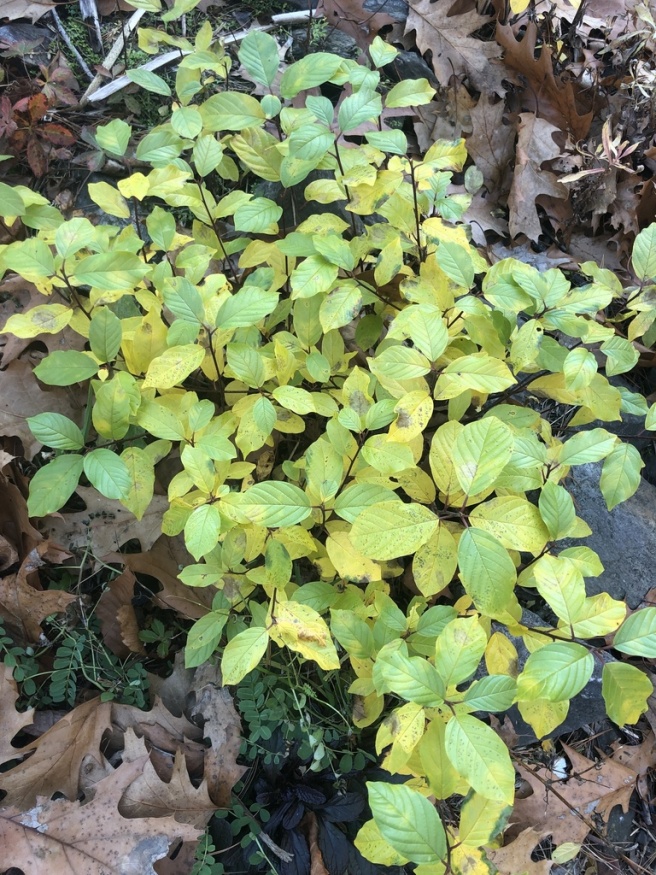
Alderleaf buckthorn is a bushy fruiting shrub found on riverbanks, meadows, and moist areas. Its native habitat is southern Canada and Northern United States; unlike the invasive buckthorn (Rhamnus cathartica).
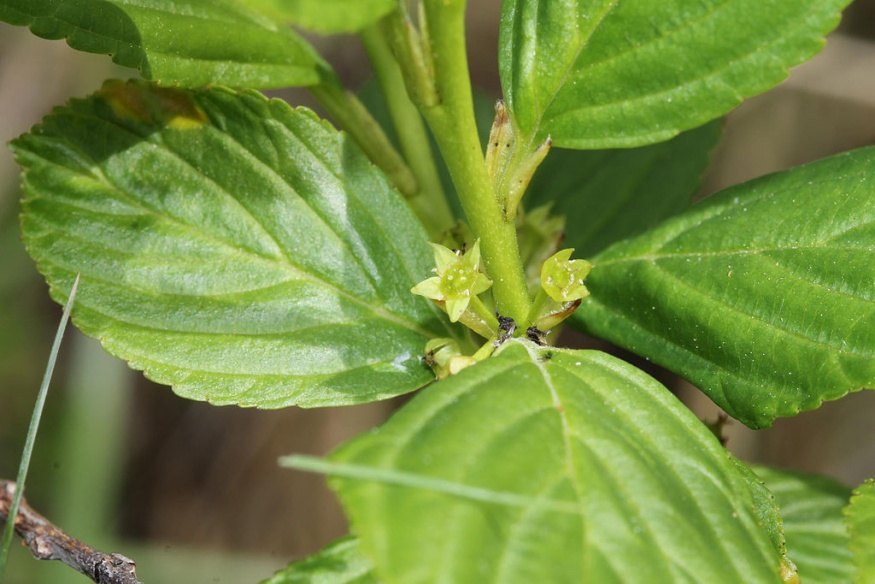
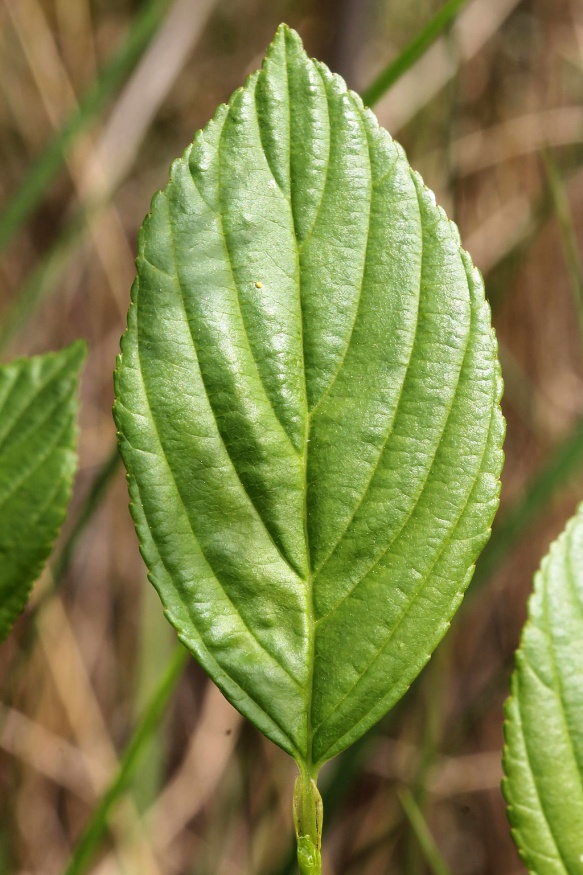
The leaves are narrowly ovate to narrowly elliptic and granular toothed. Stems are gray and smooth. Small green shallowly bell-shaped flowers appear on the from June to July. They're either solitary or in umbels (of up to three) and are either male or female (dioecious). Bluish-black three seeded berries follow (drupes). The flowers and fruit attract wildlife such as birds, butterflies and moths.
References
Giblin, D., Burke Museum Herbarium. (n.d.). Rhamnus alnifolia. Retrieved from http://biology.burke.washington.edu/herbarium/imagecollection/taxon.php?Taxon=Rhamnus%20alnifolia
Klinkenberg, Brian. (Editor) 2020. E-Flora BC: Electronic Atlas of the Plants of British Columbia [eflora.bc.ca]. Lab for Advanced Spatial Analysis, Department of Geography, University of British Columbia, Vancouver. Rhamnus alnifolia L'Hér. Retrieved from http://linnet.geog.ubc.ca/Atlas/Atlas.aspx?sciname=Rhamnus+alnifolia
California Native Plant Society. (n.d.). Alder Buckthorn. Retrieved from https://calscape.org/Rhamnus-alnifolia-(Alder-Buckthorn)?srchcr=sc59037f3eb7047
Natural Resource Conservation Service. (n.d.). Rhamnus alnifolia L'Hér. Retrieved from https://plants.usda.gov/core/profile?symbol=RHAL